
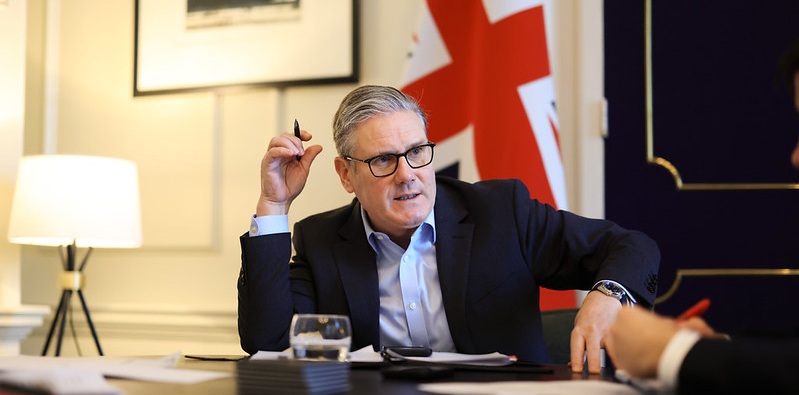
Prime minister Keir Starmer has announced his plan for resignation. Keep an eye on this page for the latest updates.
His statement in Downing Street comes after months of pressure over his leadership and folllowing the election of Andy Burnham as an MP in the Makerfield by-election. Many say the former Greater Manchester mayor is likely to take over as prime minister.
Stood at a podium outside Number 10, Starmer said he will quit but remain in post until after a possible Labour Party leadership vote is completed.
Keir Starmer said:
“The question my party is asking now is whether I am best placed to lead us into the next general election. I have heard the answer of my parliamentary party to that question and I accept that answer with good grace.
“Every decision I have taken has been about putting the country I love first. That is why I will resign as leader of the Labour Party.
“I have spoken to His Majesty the King this morning to inform him of my decision. I will ask the National Executive Committee of the Labour Party to set out a timetable with nominations opening on 9th July and completed by the summer recess.
“In the case of a contest, this will ensure a new leader is in place before parliament returns in September. I will remain in post as prime minister until the contest is complete, and I will do everything I can to ensure an orderly handover of power.”
Keir Starmer’s resignation comes two years after the Labour Party won the general election. He is the sixth prime minister to resign in the last 10 years.
UPDATE:
Andy Burnham has confirmed he will stand to be prime minister. Former health secretary Wes Streeting, who previously said he would stand in a leadership contest, said he will back Burnham.
If there is no challenger to Andy Burnham, he would likely be prime minister by mid-July.
The business reaction to Keir Starmer’s resignation
Eva Barboni, executive director, Enterprise Britain
“The message we hear consistently from entrepreneurs, business leaders, and investors is that they want a government whose ambition for the country matches their own.
“They also want to see a clear economic plan that acknowledges the critical role our fastest-growing companies play in driving economic growth, creating jobs, and advancing shared prosperity.
“As Labour selects its next leader, it is crucial that they prioritise accelerating the reforms needed to help British businesses start, scale, and succeed here in the UK.
“This should not be treated as an ideological issue. We need a broad consensus that to deliver shared prosperity for the country, we need to create an environment in which companies can grow.”
Conor McCarthy, co-founder and CEO, Flipdish:
“If Burnham becomes prime minister and follows through on his promise to reduce hospitality VAT to 10%, it would be a meaningful and material boost for the sector. It creates immediate headroom for operators, supports employment, and reduces the pressure to pass costs on to consumers.
“Hospitality is operating under sustained cost inflation across wages, energy, rents, business rates, and supply chains. Many viable businesses are not constrained by demand or by skill, but by unsustainable margins.
“A VAT reduction will not solve every structural issue, but it is one of the most direct levers the government can pull to provide fast relief. The priority then is certainty. Implement it, commit to it, and give operators the confidence to plan and invest over the next 12 to 24 months.”
Simon Pratt, chief operating officer, Portman Finance Group:
“What business are really crying out for now is some certainty. For SMEs in particular, confidence is such a huge part of growth. If business owners are constantly trying to second guess the direction of travel coming out of Westminster, planning properly for the future, making the right investment decisions and accessing the right type of finance becomes much harder.
“Across the market, we’re already seeing more firms come under pressure. Projects are being delayed, invoices are taking longer to be paid, and in some cases businesses are seeing traditional lenders reduce their overdrafts.”
“Ultimately, certainty is what gives businesses the confidence to invest, expand and borrow. Firms need to know that if they commit to a growth plan today, the wider political or economic landscape isn’t suddenly going to undermine those decisions tomorrow.”
More follows