
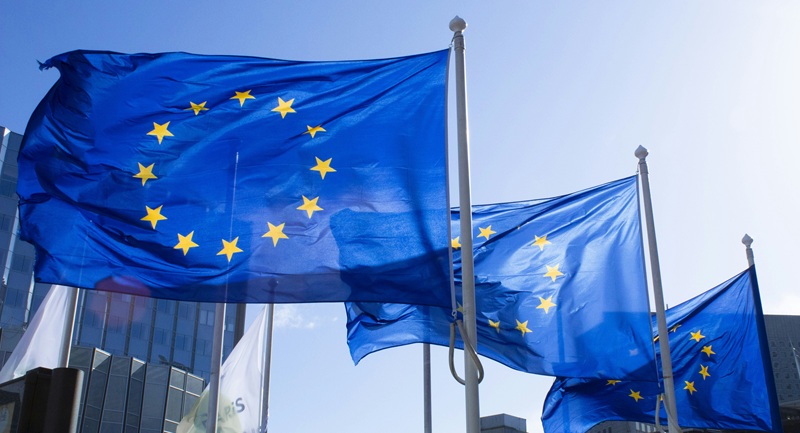
The government’s ‘Cutting Costs’ (European Partnership) Bill has been introduced to Parliament.
The legislation will allow the implementation of two trade deals agreed by the UK and the EU earlier this month.
The Sanitary and Phytosanitary (SPS) Agreement involves the scrapping of routine border checks for UK agricultural exports.
It means businesses will no longer pay charges including up to £200 each for export health certificates, up to £1,200 per load on British cheese and up to £1,400 per shipment of British salmon. The need for ‘Not for EU’ retail labels on the vast majority of products will also be removed.
The Emissions Trading Systems (ETS) Linking Agreement will link the UK and the EU’s emissions trading scheme, resulting in the removal of cross-border carbon taxes.
The government expects the ETS deal to take effect on 1 January 202, with the SPS agreement coming into force from 1 March 2028, with targeted transition periods applying in specific areas such as pesticides, organics, and precision breeding.
Hamish Falconer, minister for European relations, said:
“For years, British businesses have been forced to follow EU rules without any say, while paying millions in red tape.
“Today’s Cutting Costs Bill allows us to implement two major trade agreements: our food & drink trade deal and our emissions trading scheme linking agreement.
“It allows us to eliminate paperwork for our food and drink traders, protect billions of pounds worth of British exports from carbon taxes, and make doing business with our largest trading partner cheaper and easier.”
Reaction to Cutting Costs Bill
Tina McKenzie, national chair, Federation of Small Businesses, said:
“From British cheese and meat heading to Europe, to fresh fruit and vegetables coming into the UK, moving food across the UK and Europe should be about trading goods, not fighting through mountains of paperwork.
“The new UK-EU Sanitary and Phytosanitary (SPS) Agreement reached at the summit is a major step forward.
“Our figures show that change is needed. Almost two thirds (63%) of small firms trading with the EU have faced significant barriers. Of those moving goods across the border, 64% have struggled with customs paperwork, while one in five have faced problems with physical inspections.
“This can hold up entire shipments or leave businesses with stock they can no longer sell after inspection.
“Despite this, the EU remains a vital market for small businesses. More than 90% of SME exporters sell to the EU and 87% of SME importers buy from the region. Yet a third (34%) expect to reduce or stop trading with the EU if current arrangements remain unchanged.
“However, this agreement must not replace one set of barriers with another. Small firms cannot afford to absorb costly changes to meet new regulations and the government must give them clear and practical guidance before any new rules take effect.
“The summit’s commitment to further discussions on economic security and resilience is also welcome, particularly the focus on keeping UK small firms connected to European supply chains.
“The test now is whether these agreements deliver real changes for small firms, not more paperwork.”
Shevaun Haviland, director general, British Chambers of Commerce, said:
“Removing many of the costly checks on food and plant products will make a real difference to smaller exporters. Linking our carbon markets should protect firms from extra charges and paperwork, while the youth scheme will create valuable opportunities for work, study and training on both sides.
“Deadlines to implement the three agreements must now be hit, so firms know when the promised savings and opportunities will arrive, with simple guidance to help them prepare.
“But today should be a springboard, not the finish line. The world has changed dramatically since our initial trading relationship was agreed, and Europe is reshaping its support for industries and supply chains.
“Beyond the Summit’s warm words, the UK and EU must now move quickly towards a formal agreement on Made in Europe that recognises Britain as a trusted partner. UK-made parts, materials, technology, AI and cloud services, and expertise are essential for European supply chains. Excluding them would raise costs, weaken investment and damage competitiveness on both sides of the Channel.
“The wider conversation about our long-term relationship that the prime minister has called for must also now begin. There are many possible routes, and each brings choices and trade-offs. The government should set out a clear-headed assessment, listen to business, and judge every option against whether it supports growth, investment and jobs.
“Businesses have shown enormous resilience, but they cannot build long-term plans around repeated short-term fixes. We need to know where we are headed, a clear timetable for delivery and a relationship with Europe that is fit for the future.”