
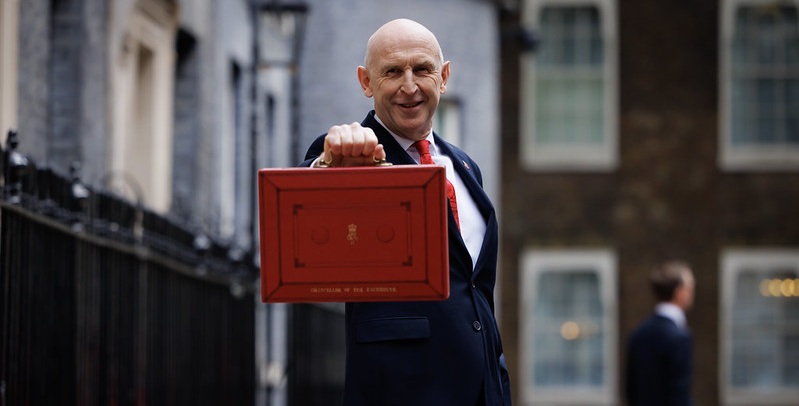
John Healey has delivered his first Budget as chancellor. Here the measures of key interest to small and medium sized business owners.
Trading allowance
The amount individuals can earn from self-employment tax free will increase from £1,000 to £3,000.
Business Asset Disposal Relief
The Business Asset Disposal Relief (BADR) for capital gains tax will be cut from £1 million to £500,000. The follows the BADR rate being increased to 18% in April 2026.
Founders’ relief
A new founders’ relief will provide a 10% capital gains tax rate for up to £10 million of lifetime gains. A consultation on the relief says that to qualify, an individual will need to:
- have held 25% of the company’s ordinary share capital (together with corresponding voting rights and rights to distributable profits and assets on a winding up), at the point when the trading activity for which the company was formed commenced, or the preparation for that trade commenced.
- have held the shares or securities for at least five years before their disposal.
- have been UK resident under the Statutory Residence.
Young entrepreneurs allowance
A new young entrepreneurs allowance covering a year of living costs while young founders start a business.
Support for female entrepreneurs
New scale-up programme for female founders.
British Business Bank will double its funding for female-led businesses to £200m.
Business rates
The threshold for small business rates relief (SBBR) for retail, leisure and hospitality businesses in England will increase from £12,000 to £18,000 from April 2027. The government says this means 70,000 more businesses will no longer pay business rates.
For all other retail, hospitality, and leisure properties, business rates will be frozen for
two years.
The Supporting Small Business (SSB) scheme will be extended to 1 April 2027 for those who were in receipt of it 2023 SSB.
Mayoral strategic authorities will receive 20% of business rates revenue from April 2027, with 100% being devolved by the end of the Parliament.
Business rates reliefs will be removed for vape shops and adult gaming centres, so the reliefs are “better targeted at businesses that support thriving high street. From April 2027, vape shops and adult gaming centres in England will no longer be eligible for the RHL multipliers, and vape shops will also lose eligibility for SBRR.
High streets
The Ministry for Housing, Communities and Local Government (MHCLG) has launched its new high streets strategy today. It includes:
- a commitment to creating a ‘High Streets First’ principle for relevant public estates
- Business Improvement Distinct reform, and cleaning up England’s high streets.
- New £125 million Derelict Buildings Fund to support English local authorities to transform buildings to benefit communities.
- £65 million to help communities in England rescue and revamp buildings and businesses at risk of closure, such as pubs and sports clubs.
- Up to £10 million of grant funding to help local authorities in England use High Street Rental Auction powers which allow them to compel landlords to rent out commercial properties that have been persistently vacant for more than a year.
VAT for online sellers
Online marketplaces will be responsible for responsible for collecting VAT on sales by UK businesses, where those businesses are making more than £90,000 of sales through the marketplace.
Business and infrastructure funding
A further £20.4 billion for the National Wealth Fund and British Business Bank.
The £5 billion uplift to the British Business Bank’s financial capacity includes £1.4 billion to invest in equity funds backing high-growth businesses, £165 million for community lenders and £450 million for a new venture debt product providing non-dilutive finance to innovative firms.
National Minimum Wage and National Living Wage
National Living Wage will rise to £13.21 an hour. National Minimum Wage for 18-20-year-olds will increase to £11.27 an hour and to £8.31 an hour for 16 to 17-year-olds and eligible apprentices.
Fuel duty
The 5p cut in fuel duty extended to July 2027.
Tackling small business red tape
The Department for Business, Innovation, Science and Trade has accepted 14 of the 15 recommendations of the Small Business Regulation Taskforce aimed at reducing regulatory
burdens on small businesses.
This includes making it simpler for small companies to bid for contracts, streamlining official business surveys to reduce the number of data requests businesses have to fill out, and implementing the government’s ‘Tell Us Once’ ambition.
Tariffs on food products
As previously announced, tariffs removed on over 100 food products, including chocolate and fruit juice.
Small Producer Relief
Small Producer Relief in the alcohol duty system extended to provide £10 million per year of support to over 2,000 small alcohol producers.
AI
£30 million to pilot local partnerships which will include help for small businesses to adopt AI to help them grow. It will start with the West Yorkshire Combined Authority, South Yorkshire Mayoral Combined Authority, and York and North Yorkshire Combined Authority.
An additional £80 million for Sovereign AI’s R&D Procurement Scheme which helps British AI companies to work on some of the government’s key challenges across the health and care system and in AI security, assurance and safe adoption.
A new AI Challenge Prize, supported by £15 million of funding. The first competition
will focus on the NHS, with a top award of up to £2.5 million for the most promising solution to a priority healthcare challenge.
HMRC, tax avoidance and self assessment
Several measures were announced on tackling tax avoidance and unpaid tax. They include:
- HM Revenue & Customs (HMRC) will be given a new power to directly recover from bank accounts “lower-value tax debts from those who can afford to pay but repeatedly fail to do so”.
- Funding for an additional 670 HMRC officers to investigate non-compliance and recover unpaid tax, on top of previous recruitment commitments.
- Close a loophole that allows some overseas businesses to supply services to UK businesses without accounting for UK VAT.
- Introduce mandatory standards for electronic and mobile point-of-sale systems to combat electronic sales suppression.
From April 2029, self assessment taxpayers who make payments on account for tax bills will “make smaller, more regular contributions towards their tax bill throughout the year, bringing payment closer to when income is earned”.
Enterprise Management Incentives (EMI)
The government is introducing EMI2 which increases the value of existing tax-advantaged options for employees at companies that fall outside of EMI from £60,000 to £120,000.
E-invoicing
The government has setting out an implementation roadmap for requiring VAT e-invoicing from April 2029, which is aimed at reducing business’ administrative burdens and improving efficiency.
Non-compete clauses
The Budget confirmed that the government will ban non-compete clauses in employment contracts which businesses groups have complained are a barrier to hiring for start-ups and scaling businesses.
There will be a consultation on the proposed changes.
Parental rights
As previously announced, parental pay will be extended to more than 150,000 additional parents per year, including self-employed father and partners who have previously missed out. Eligible parents will receive two weeks of support currently worth up to £194 a week.
ISAs
The planned change to reduce the cut the cash ISA limit from £20,000 to £12,000 will not go ahead. A new “starter ISA” to incentivise first time investors will be introduced.