
If you run a small or medium sized business, you will know the feeling of trying to build something solid while the ground keeps shifting below you. One minute you are focused on growth, the next you are dealing with rising costs, recruitment headaches, a customer base that changes its mind overnight or a curveball you did not see coming.
Resilience gets talked about a lot in business, usually in the language of cash flow, efficiency and contingency plans, and those things matter, but they do not fully explain why some organisations stay steady when things get a little messy, while others start wobbling the moment conditions stop being perfect.
One of the best places SMEs can learn about resilience is from social entrepreneurs, not because we have it easier, but because we have to build under pressure from day one, often with small teams, limited budgets, public accountability and a mission that is not a nice add-on but the entire point of the business.
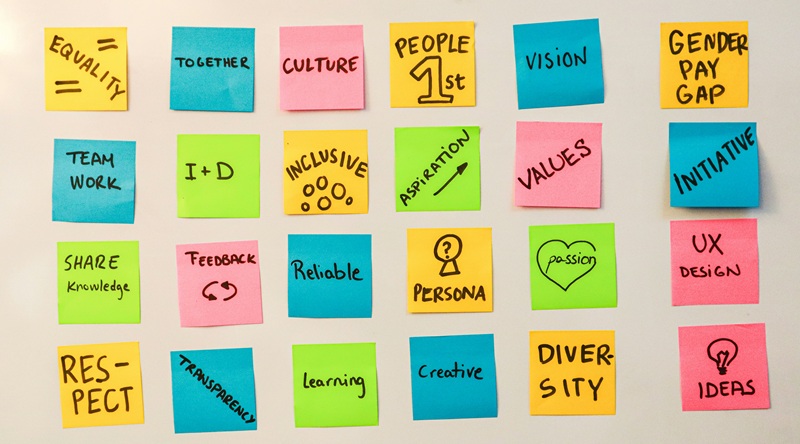
Social ventures cannot afford to treat values as simply vague marketing language because the moment values stop showing up in decisions, trust drops and support disappears, which is why values become the most operational and non-negotiable, and that is exactly what makes them useful for SMEs too.
I lead a cancer charity, so I am coming at this through a different lens, but the principles are the same. The Robin Cancer Trust was set up after I lost my brother Robin to a rare form of testicular cancer at 24, and we have had to do something many people find awkward or easy to ignore, which is get young people talking about cancers. That values-led messaging has taught me that resilience is not just about planning, it is about having a clear identity and the confidence to stick to it when the easy option would be to play it safe.
The first lesson I want to share is that values have to make decisions for you, especially when you are tired, stressed, or tempted by something new and shiny. In a small organisation, every yes is a cost which ultimately takes time, energy and focus, and if your values are clear, it becomes easier to filter certain opportunities quickly.
In our world, it would be easy to soften the message so nobody feels uncomfortable, but our values tell us something simple, which is that if the message does not cut through the noise to the people who need it most, then it isn’t doing its job. That is why we do awareness in a way people actually remember, including humour and bold creatives, because if the choice is being ‘appropriate’ and being ignored, or being brave or silly and being heard, we choose being heard.
One of the reasons our work lands is because it meets people where they are, with language they would actually use and a tone that feels human. When I ran 500km in a giant testicle costume, it was obviously ridiculous, but it was designed that way for a reason, because if someone laughs, they look, and if they look, they listen, and if they listen, they might check themselves, and that is how early detection happens and how we save lives.
The second lesson is that people are your resilience. Social ventures are forced to build strong cultures early because the work can be intense and the mission attracts people who care, and if you do not look after those people properly, the engine breaks down.
In our case, we deliver awareness talks, show up in schools and workplaces, and run campaigns that rely on trust, and we have learned that clarity, humour and consistency keep people engaged far more than polished corporate language ever will. SMEs can take that lesson without changing what they do, because culture is built through what you repeat, what you prioritise and what you tolerate, and those daily choices become your resilience when the business hits a tough patch.
The third lesson is how you communicate when things are uncertain. Mission-driven organisations live and die on trust, and trust is built through honesty, not perfection. When something is challenging, you cannot hide behind jargon and hope it goes away, you have to talk like a human being, explain what you are doing and why, and bring people with you.
SMEs that communicate early and clearly tend to reduce internal anxiety, protect customer confidence and keep teams pulling in the same direction, which matters more than ever when the outside world feels unpredictable.
Resilience is not built through certainty, because none of us get that for long, but it is built through clarity, consistency and trust. Social entrepreneurs often have to master those things early because the mission depends on it, and SMEs can borrow that discipline by making values operational, being braver and more human in their communication, and building cultures that people want to be part of.
When conditions get tough, the organisations that last are rarely the ones with the slickest slogans; they are the ones that know who they are and have the courage to act like it.
Toby Freeman is a passionate cancer advocate, podcast host, and founder and CEO of The Robin Cancer Trust, set up in memory of his brother, who died from late-stage testicular cancer at just 24.