

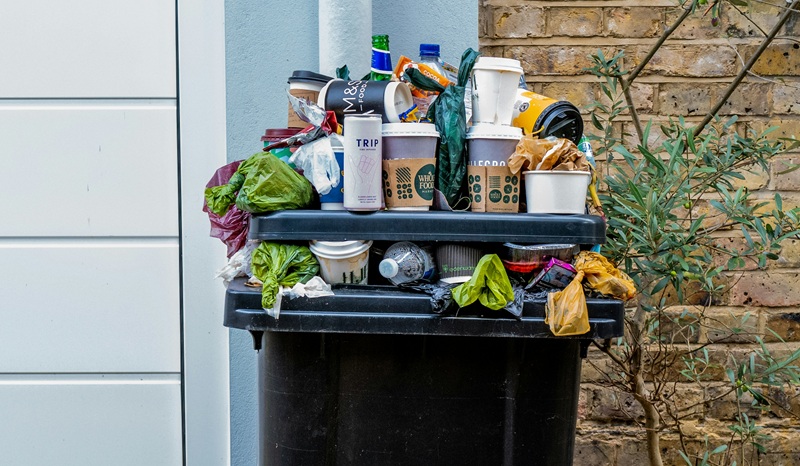
The festive season is marked by last-minute dashing to the shops, indulging in meals with friends, and decking the halls. However, few stop to consider how all the shopping and consumption truly makes the holiday into something of a ‘season of waste’. In fact, the UK produces 3 million tonnes more waste during the month of December than at any other time of the year.
Although many picture festive waste as brimming household bins, businesses face similar pressures behind the scenes. In particular, SMEs often lack a dedicated systems or capacity that larger enterprises rely on, so the December spike in waste can quickly become a headache.
Even so, the seasonal surge doesn’t have to be overwhelming. There are practical steps SMEs can take to address this challenge during the festive period.
The Christmas waste issue
The reasons behind the increase in waste around Christmas are simple; more is being bought. Each December around 114,000 tons of plastic packaging are discarded in the UK, alongside some 8 million trees and 168 million Christmas lights.
A significant issue at this time of year is the proliferation of decorative items which are seen as disposable. Rather than investing in decorations which are put up and taken down each year, the consumer demand has shifted to keep up with trends and to replace the Christmas display year-on-year.
Around 23 million illuminated ‘Christmas figures’ are discarded yearly, even though the characters they depict do not change with the years. The surge of seasonal waste carries serious environmental consequences, especially because most of these items are made from plastic and, when thrown away in such large quantities, inevitably end up in landfill.
This issue is exacerbated by the choices made within many small businesses. By supplying cheap, disposable decorations, they help perpetuate the single-use mindset surrounding Christmas. Business owners looking to reduce waste, both from their own operations and downstream with customers, should prioritise well-made, durable products rather than disposable novelties destined for short-term use.
The hospitality industry should also consider planning more effectively for the Christmas rush – there is 19% more food waste in December than at any other time of the year. This could be mitigated by better forecasting of what will be sold to stop perfectly good food being thrown out.
Another growing concern is the rise of e-waste and batteries. Every year there are over 1,000 fires in bin lorries caused by batteries being improperly disposed of. The fires occur when the batteries are compacted by the trucks and, aside from releasing chemicals into the air in the smoke, they put refuse workers at serious, unnecessary risk.
Again, SMEs have a specific and important role to play here. Choosing to stock electrical items that are powered from the mains or plastic free can greatly reduce downstream waste. If battery powered items are unavoidable, then offering safe battery disposal bins should be the standard.
Avoiding a season of waste
These issues should serve as a clear call to action to SME stakeholders. Limiting business contribution to waste can be achieved through a number of ways.
Business owners should conduct waste audits, taking stock not only of what they sell, but also what they waste. In many cases, they will find that there are certain types of waste being produced in abundance and they can then take steps to reduce this. For instance, if it is found that there is a large amount of discarded plastic packaging, then taking targeted action to switch to renewable or packaging free options will have a large, rapid effect.
Waste audits have revealed that only 23% of what is thrown away is actually ‘trash’ and the rest could have been recycled or reused. With the right support and tools to help organise and assess materials, conducting a waste audit becomes far more manageable.
SMEs should also engage with suppliers in the circular economy. The circular economy is an economic model which focuses on waste minimisation through keeping materials in circulation, rather than removing them from the system by throwing them away. Many suppliers actively engage in this model; however public perceptions are lagging. Some 46% of people believe that the circular economy will cost them money, when in reality it can save a business upwards of £20,000 a year in waste disposal costs.
Switching to renewable packaging is also a robust pathway to drive down waste. Whilst this may not always be possible, however, wherever they can, businesses should stock products which come in plastic free, or no packaging at all. Making this change could lower an SMEs waste output by 51%.
Each of these measures makes a difference on its own, but they’re most effective when combined. A multi-pronged approach is the best way to drive reductions in waste and minimise contribution to the Christmas pileup.
A waste free Christmas
SMEs have the opportunity to play a pivotal role in reducing the UK’s seasonal surge in waste. Through engaging a number of levers such as waste audits, engaging suppliers in the circular economy, and switching to renewable packaging, the amount of waste produced can be greatly decreased.
These simple actions not only have positive environmental outcomes but also reduce costs. Altogether, making these efforts ensure that SMEs are contributing to a sustainable festive season, and not a season of waste.
Suzanne Mitchison is waste service director at Everflow