


Former England footballer Rio Ferdinand was recently a judge at CoCreate Pitch, a competition run by business-to-business e-commerce platform Alibaba.com.
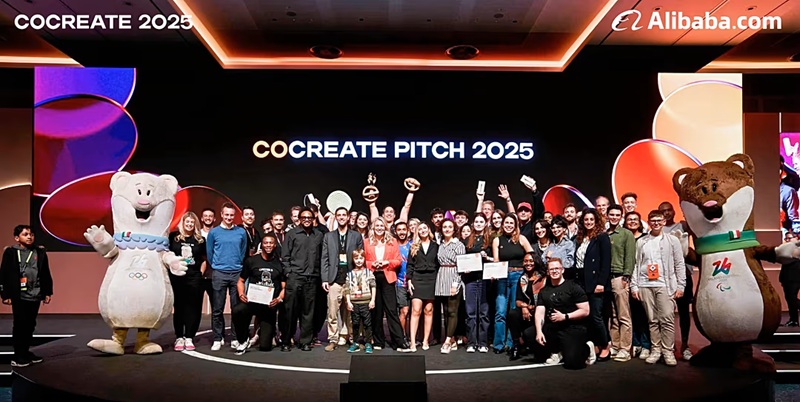
From thousands of entries, 30 entrepreneurs from across Europe presented during the CoCreate Europe event in London, with the overall prize won by 15-year-old UK entrepreneur Harrison Nott.
Ahead of the pitching competition, SMEWeb editor Dan Martin met Rio Ferdinand to discuss why he’s involved in the pitch, his advice for engaging investors and the lessons entrepreneurs can learn from footballers.
What you be looking for in the winning business?
“The ability to be adaptable to new trends and new technology. For example, AI. Some business models don’t require it, but I think going forward, a lot of businesses will require it in some way to be able to scale.
“As important as the idea is the founder. It has to be somebody who’s charismatic and has the passion. You need to be able to see that they can lead and has entrepreneurial spirit.”
You are an investor yourself. What is your advice for entrepreneurs when they’re pitching to investors?
“The confidence to be able to communicate what you want to do, what you’re doing and how you’re looking to get there. Make it as clear and transparent as possble so it’s easy for me to digest. I very quickly learned that we can all get emotional and invested in an idea, but unless that person can convey their vision, investment will be impossible no matter what the idea is.”
What lessons from the football pitch can be useful in the business world?
“Application, desire and work ethic. Consistency is also a massive thing. Being able to get up and go every day and be really being diligent about what you’re doing.
“Passion is vital. I don’t know many business people who do well without passion for what they’re doing. Footballers have got to have a passion. It hurts when it’s not going well, but you enjoy it when it’s going well. You need to remain balanced.
“You need to want to be the best in everything that you do, have the competitive edge and energy. You can be happy to start at the bottom, but there needs to be a pathway. You need to create the route to being the best and getting to the top.”
When you retired retired from football, how did you decide what you wanted to do next?
“At 27 years old I made a conscious decision to open myself up to looking at opportunities or industries that I may want to go into. Media was one of them and I set up a digital magazine. My first interview was with 50 Cent. Then after Roger Federer won Wimbledom, I interviewed him.
“I started a restaurant that ran for 15 years. The manager used to go there, the CEO used to dine there, Pep Guardiola, Mancini visited. I also set up my foundation which been going for 15 years and helps underprivileged young people, and I started Football Escapes, a tour company.
“When I retired, I wanted four or five things that I could do. I was ready so it was a seamless transition.”
What is your advice for entrepreneurs for maintaining a good relationship with their investor?
“Communication is key. Keeping them abreast of things that are going on, especially in landmark moments. Investors don’t like surprises. They will expect a roadmap and a plan, but if that’s going to deviate, then your communication needs to be really good. Keep the trust between you and the investor, because they are the livelihood of the business, and you might need their money again! I love the newsletters that come through from my businesses.”
The Rio Ferdinand Foundation is a big part of what you do. How do you measure success for that?
“The impact on young people. When I meet a kid and I’m told the trials and tribulations that they have gone through for the first years of their life, I often wonder how they’ve even managed to get to where they are. But then you see the confidence that’s built in two or three months through the projects that we do.
“We’ve got our own accreditation and skills programmes and we also provide them with the opportunity to have a work placement in the companies such as TNT, Aston Martin, Ralph Lauren and Warner Music. They see they have an opportunity to get a job in a big company, where before they could never have even got through the front door. They get their confidence back and are on the road to being able to support themselves, to be independent, responsible, build a new life for themselves, and hopefully build a family at some point.
“We’re 15 years in and almost 15,000 young people have been through the foundation. It’s one of the most rewarding things that I’ve been involved in. You see the impact from day one to when they leave us and go into the big, wide world.”
Rio Ferdinand also spoke on a panel on stage at the event. Here are some of the insights he shared.
Lessons from failure
“You’ve got to expect down times, negativity and failures. This is all part of the journey. I don’t know anyone who’s been super successful in business who hasn’t got failure stories.
“Failures don’t mean the end of the world. It doesn’t mean stop. It doesn’t mean you have to pivot. It doesn’t mean that you’ve got to build yourself back up, build a confidence, back up to go again. But I really do believe in building yourself up to expect failures and problems, because that is normal. It will happen, that’s a certainty.”
How challenges have taught resilience
“Losing the Premier League on the last day with the last ball, that’s the type of resilience and where you go away and you think, “right, we’re going to rebuild and go again”. There’s a determination, a consistency and desire to come back.
“The resilience when I lost my wife and my mum very close in time, that’s a different type of resilience which involves drawing on your inner strength to wake up every day and to get out of bed. Showing my young children that it’s not about giving up. There’s a purpose for why I’m getting up and you’re the purpose.
“It’s about drawing on the right things for you in those moments to keep you going, keep the wheels moving and have a chance of succeeding again.”
Succeeding with a content focused business
“For my media business, the biggest thing for is attention. If you can get the attention, you can get the eyeballs, and you’ve got a good product, you’re going to make a lot of money. Being able to merge commerce and content is crucial.
“With platforms like Alibaba.com and events such as CoCreate, the tools that are now at our fingertips means you have no excuses. It’s making it a frictionless ecosystem that you can go into, and in an hour, you can create a business, or find out what’s trending and work out if your idea is any good and you need to move onto the next one. There’s no wasting time.”