

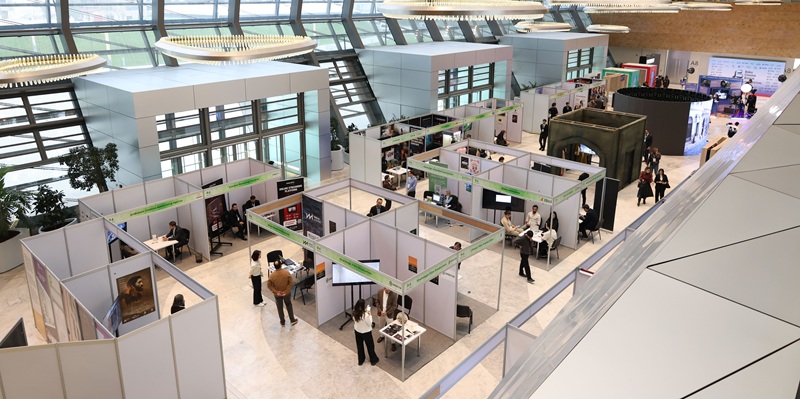
Most small businesses assume the venue sets the price of a stand and that the smart move is to book as little space as possible. Tom Watts, director of Stand Central, looked at the rate cards of 202 UK trade shows and argues the money is better spent on where you stand and what visitors see when they walk past.
A trade show can be one of the quickest ways for a small business to get in front of buyers. You meet hundreds of people in a few days, all of whom chose to walk into a hall full of companies like yours. It can also be an expensive few days if nobody stops.
We checked the exhibiting pages of 202 UK B2B trade shows at 21 venues earlier this year. Only 46 of them published any price at all. Here’s what the ones that did tell us, and where I’d put the money if I were booking a first show today.
The show sets the price, not the hall
It’s natural to assume a big London venue costs more than a regional one. The venue does matter a bit, but who the show attracts matters far more.
Space-only rates at Excel London ran from £388 to £1,100 per m², ex VAT, depending on the show. At the NEC the range was £207 to £789. One organiser charges £207 per m² at one of its shows and £885 at another, more than four times as much.
Some regional shows were much cheaper. The Outdoor Trade Show at Exhibition Centre Liverpool listed £125 per m², and three Harrogate shows came in between £168 and £238.
None of that makes the cheapest show the best one. Choose it for who will be there, and ask the organiser for the full rate card in writing, since eight big organiser groups published no prices for any of their 33 shows.
Where you stand matters more than how much floor you buy
It’s tempting to save money by booking the smallest space you can. In my experience size matters far less than position.
Visitors walk the main aisles, so a stand on a main route, near the entrance, by the catering or next to a big-name exhibitor gets far more people past it than a larger plot in a back corner. A corner or peninsula plot is open on more than one side, so people can see you and step onto the stand from more than one direction.

Better positions often don’t cost much more per m², if anything. At BTME, the greenkeeping show in Harrogate, an island stand open on all four sides cost £259 per m², against £233 for a standard space-only plot, and an extra open side at the end of a row was £100. Those are small sums next to what a busier spot can bring in. The best spots go to whoever books first, though, so ask for the floor plan early and book as soon as you’ve committed.
My advice is to get the best position you can afford, even if that means a slightly smaller plot, and then make sure what’s on it is worth stopping for.
Don’t skimp on the stand itself
A good position only gets people past your stand. What they see in the second or two it takes to walk by decides whether they stop.
A tired banner and a bare table on a great plot wastes the money you spent on the space. A few things make the biggest difference:
- A clear message at eye level and above. Your name and what you do should be readable from the aisle, high enough to be seen over people’s heads.
- Light. LED lightbox walls and counters glow against a hall full of flat printed graphics and stay bright under harsh hall lighting.
- Something moving. A short silent video on a screen, or someone running a live demo, catches the eye in a way a still image can’t.
- An open front. Put the counter to one side so visitors have an obvious way onto the stand, rather than a barrier across it.

A quality stand is also one you can use again. A portable exhibition stand that packs into carry bags or wheeled cases and goes up without tools costs the same whether you take it to one show or ten, so every show after the first gets cheaper.
Budget for power and fees before you compare shows
Floor space is rarely the whole bill. On a space-only plot, the power supply is always an order of its own. At National Civils, Floodex and National Drainage, for example, a basic electrical package with one socket and spotlights is £349. If you plan to run lighting, a screen or a card machine, add power to your budget from the start.
There can be compulsory fees too. Six shows publish fees that every exhibitor pays, from £195 at UK Metals Expo to £750 at Futurebuild. Add them in before you compare shows.
Order early, because late costs more
Every show has an exhibitor manual, and most have several deadlines rather than one. We read 21 UK manuals and the first deadline fell a median of 38 days before the show opened.
Missing one rarely stops you exhibiting, but it does cost you. Late orders cost up to 25% more in the manuals we read, and ordering onsite up to 50% more.

Ask for the manual as soon as you book and work back from the earliest date, including your graphics, which need proofing and printing.
Pick the show for its visitors, get the best position you can afford, and spend properly on a stand that makes people stop. That’s where the money comes back.
Tom Watts is director of Stand Central, a UK supplier of exhibition stands, pop-up displays and banners, with free artwork design or proofing on every order.
This is sponsored content by Stand Central.