
Chancellor John Healey delivers his 2026 Autumn Budget on 28 October.
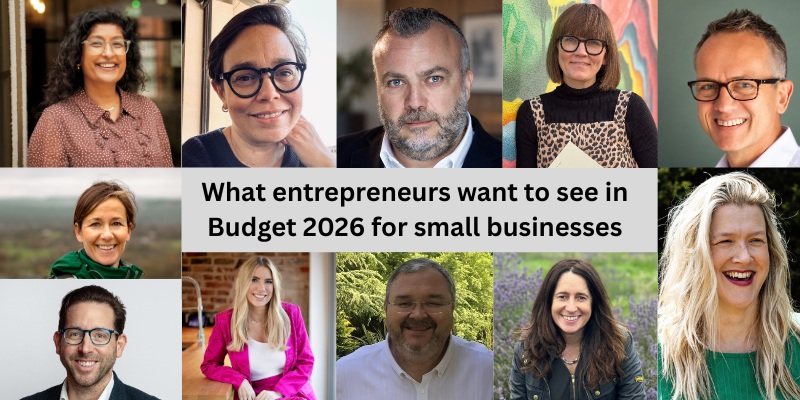
Ahead of the speech, 22 founders outline what they would like to see for small business owners.
Follow coverage of the Autumn Budget on SMEWeb’s LinkedIn and X pages. You can also follow our editor, Dan Martin, on LinkedIn and X.
Look out for a guide to the Budget 2026 measures impacting small businesses published on this website shortly after the speech.
Katie Vale, Katie Vale Designs:
“As a micro business owner, I’d like to see a Budget that makes it easier for very small businesses to start, survive and grow. We need simpler access to start-up support and greater help for micro businesses taking the huge step of employing someone.
“I’d also like to see measures encouraging consumers to spend with independent UK businesses, keeping more money within our local economies.
“Finally, we desperately need practical help with EU trade. Since Brexit, selling and shipping to European customers has become significantly more difficult and expensive for businesses like mine. Making cross-border trade simpler and more affordable would open an important market back up to thousands of small UK businesses.”
Kate Tynan, The Cake Business Club:
“As a solo business owner who works B2B with predominantly non-VAT registered businesses in the food industry, I’d love to see the VAT threshold increased above 90k. I don’t feel it’s high enough before VAT kicks in.
“I hit VAT registration in the first few years of trading but have struggled to pass on the VAT to my clients as they are not VAT registered. They just see it as a 20% price hike – which means I just end up paying more tax to cover the VAT which to be honest, is crippling my business.”
Seamus Begley, The Studio of Possible:
“I’d like this Budget to stop assuming every successful small business wants to become a big business.
“We’ve spent decades equating growth with headcount. But technology, AI and access to global talent have completely changed that equation. A small business can now compete internationally, create valuable intellectual property and generate significant revenue without employing hundreds of people.
“So rather than simply incentivising SMEs to hire more people, I’d like to see the government reward productivity, innovation and international ambition.
“That means introducing targeted tax incentives for small businesses investing in AI, automation and other productivity-enhancing technology, making it easier for SMEs to claim support for innovation and R&D, and expanding access to affordable finance for businesses investing in technology and intellectual property rather than simply physical assets.
“The government should also make it easier for small businesses to sell internationally, whether through practical export support, access to overseas markets or help navigating international regulation, and ensure public procurement gives genuinely small businesses a fairer opportunity to win contracts.
“And there needs to be greater recognition that talent doesn’t always have to mean payroll. A modern SME might combine a small core team with freelancers, specialists and global talent. Policy should support that flexibility rather than penalise businesses simply because they choose not to build a large permanent workforce.”
Sally Vickers, Banwell Antiques:
“It sounds simple, but cheaper parking would make a real difference. When it’s easier and more affordable to park, more people visit their local high street, and that footfall keeps independent shops like ours going.
But parking is only part of the picture. Over the past year, business rates, higher employer National Insurance and rising wages have all squeezed small retailers. In this Budget, I’d like to see proper rates relief for small shops, a higher Employment Allowance and the return of tax-free shopping for overseas visitors. Give high streets a fair chance and we’ll keep them busy and thriving.”
Martin Port, Build Concierge:
“I would consider introducing more support and tax reliefs to encourage people to start and run a business. I think fondly back to the days of Business Link, when a founder with a problem could simply pick up the phone and speak to an experienced advisor.
“Now, the government wants to throw debt at people through the British Business Bank and StartUp Loans but take-up is limited. Why? Without Business Link or any safety nets to protect new founders, the government has failed to create that crucial layer of business support that gives entrepreneurs the confidence to take the loan.
Every piece of legislation has unintended consequences, which is why we business owners hate change so much. By giving employees the right to file for unfair dismissal from day one, the government has driven business owners to play it safe. They aren’t hiring that junior person, or that person of colour, or that neurodivergent or disabled person, because suddenly they come with more risk. The government has created this issue and needs to solve it.
I want to see more 14–19-year-olds in the workplace, gaining vital work experience. They need to be getting comfortable with the work environment earlier, and gaining skills before they leave school to make them more employable later. Moreover, they should be paid for that work experience and the government should fund that. We cannot sit idly by and watch youth unemployment continue to soar.
Over the years, I have been a passionate advocate for creating more employment for those with disabilities but, right now, the onus is on the employer to create the right space, make the required adjustments and train existing staff to understand how they may need to support the new starter. This should all be provided by the government in the form of an incentive.”
Martin Spiller, Oakmere Partners
“Entrepreneurs need three things from this Budget. One, stability, the constantly changing landscape makes owners sit on their hands, and the research is clear that uncertainty makes small firms pull back harder than anyone.
“Two, common sense. Steep Companies House fee hikes and PSC identity checks forced into allocated windows, so you cannot get ahead of them, could only have been designed by a civil servant.
“Three, take the ‘I’ out of it. Rachel Reeves loved telling us what she had done, Mr Healey should listen, or better still hire someone who has experience of making payroll on a Friday after a large customer paid late.”
Amanda Stecker, Unique Cotswold Cottages
“Small businesses need practical measures from this Budget, not more promises about growth.
“I’d like to see the VAT registration threshold increased from £90,000 to at least £120,000. The current cliff edge actively discourages some small businesses from growing because crossing it can suddenly make them significantly less competitive.
“Secondly, I’d like to see a substantial, permanent reduction in business rates for SMEs. The government has already introduced lower rates for retail, hospitality and leisure, but it needs to go further. Business rates remain a significant fixed cost based on property value rather than profitability.
“If the chancellor wants SMEs to invest, employ and grow, remove the barriers that penalise them for doing exactly that.”
Alan Somerfield, Apex Ideas:
“Britain doesn’t have an ideas problem. It has a problem turning ideas into products, factories and exports. The Budget should make it dramatically easier for small businesses to invest in R&D, prototypes, tooling and UK manufacturing, with stronger innovation tax incentives and better access to patient growth capital.
And government procurement should actively favour innovative British SMEs. If we’re serious about reindustrialising Britain, we need to stop treating manufacturing as yesterday’s economy and start backing the businesses building tomorrow’s.”
Jen Vittanuova, Jen Vittanuova Medical Aesthetics Clinics:
“As a small business owner, I’d like it to feel like we’re actually encouraged to grow. I run a medical aesthetics clinic and invest heavily back into my business, particularly in equipment, technology and training. I’ve employed people in the past, but the cost of employing someone now means I’ve chosen not to.
“VAT is another big one. There’s a huge cliff edge when you hit the threshold, especially when your patients are members of the public and you can’t just add 20% to your prices! Make it easier for small businesses to grow, employ people and keep investing”.
Jayne Sibley, Sibstar:
“When I founded my business, I knew there was a real need to help financially vulnerable people manage their money, but turning that idea into a business required investment. Securing backing through Dragons’ Den was a turning point, helping us grow and reach thousands more families.
“Yet female founders still receive a disproportionately small share of UK investment, leaving many struggling to get their businesses off the ground.
“If the government wants startups to drive economic growth, the chancellor should use this Budget to make funding more accessible to female founders, particularly early-stage businesses, by accelerating investment through initiatives such as the Invest in Women Taskforce.”
Rakhee Wood, Butterfly Financial Planning:
“For me, dividend tax is a big one. As a business owner, you have already paid corporation tax on the profits, so the increasing tax burden when taking money out of your own business can feel like another squeeze.
“I would also like to see the 19% small profits corporation tax rate extended from £50,000 to £250,000 of profits. We talk a lot about wanting small businesses to grow, but the tax system needs to support that too.
“If we want people to take the risk of starting and growing businesses in the UK, we need a tax system that makes success feel worth it.”
Ellora Coupe, Her Retrofit Space CIC:
“We need to make it easier for SMEs and women practitioners to build sustainable careers within the retrofit sector. We would like to see the Budget invest in accessible technical training, funded upskilling and clearer routes for smaller businesses to participate in publicly funded retrofit programmes.
“We also need procurement that does not inadvertently favour larger organisations, alongside meaningful support for women establishing and growing businesses in construction and retrofit. If we want retrofit to scale, we must invest in the people and small businesses who will actually deliver it.”
Matthew Jones, Open ECX:
“Businesses lose huge amounts of time chasing and processing payments, time that could be spent on revenue generating activity and growth. Invoices can spend days or weeks trapped in approval queues, being manually entered into systems, matched against purchase orders or passed between disconnected platforms. By the time a payment is officially late, employees may already have spent hours trying to get it through the system. There is, in effect, a major productivity problem hiding in Britain’s invoices, and getting on top of it could provide a much-needed boost to the economy.
“That’s why we need to see a clear timeline for the government’s e-invoicing mandate, including how and when it will be phased and which businesses it will apply to. E-invoicing can help reduce the slow, manual paperwork that is so often behind late payment delays, enabling faster approvals and fewer errors.”
Malcolm Clamp, MC Accountancy:
“SMEs do not need another Budget full of short-term fixes. They need certainty and confidence to invest.
“A reduction in employer National Insurance for smaller businesses would make a real difference, alongside meaningful support with business rates and energy costs. Investment should be encouraged through long-term, simple tax incentives that allow business owners to plan with confidence.
“Most importantly, government needs to recognise that profit and cash are not the same thing. Policies that improve SME cash flow, encourage investment, and make taking on that next employee less expensive would have a real impact on growth.”
Stephen Wales, Bespoke Pest Control:
“Fuel is a major cost for businesses like mine where travelling between customers is unavoidable, so I’d like to see fuel duty reduced, or at the very least no further increases.
“I’d also like to see meaningful tax relief for small businesses that invest in equipment, vehicles and, importantly, people. Taking on an employee is a big commitment for a small company, so reducing the tax and National Insurance burden on employers would encourage more businesses to create jobs.
“Small businesses don’t necessarily need handouts. We need the government to make it easier and more worthwhile to grow.”
Julia Hartley, Guided Outdoor Adventures:
“I’d like targeted tax relief on profits reinvested in small businesses, alongside a reduction in the costs of employing people. Founders risk their own money and time, yet the accumulating costs of running a business can leave little room for growth.
“I’ve relied on AI and automation rather than taking on an employee. These tools have been invaluable, but employing someone needs to become a more affordable next step. The Budget should help small businesses keep more of what they earn to reinvest, build resilience and create jobs when they’re ready.”
Suzanne Ekpenyong, YES Virtual Assistance:
“Access to Work is an important part of what we do, so I see first-hand how valuable the scheme can be for Deaf, disabled and neurodivergent people who need practical support to stay in work, or run their businesses.
“What I’d like to see from the Budget is proper investment in making that support faster and easier to access. If people are waiting months for decisions, the scheme risks failing them at the point they need it most.
“For small businesses, this matters. Access to Work helps people remain economically active, productive and independent, while giving employers access to talent they might otherwise lose. It should be treated as an investment in productivity and a pathway to greater growth, not just a cost.”
Andy Oury, Oury Clark:
“There has been speculation that the government might increase capital gains tax in line with income tax levels but that would be a disaster. It would stop people investing in the UK and stop people building businesses. If people spend 10 years building a business and find at the end of it they will lose 50% then the sums just dont stack up. It would mean people don’t want to sell their assets and then the economy stops.
“I’d be keen for the government to do the opposite and bring back business asset disposal relief. This would be a hugely important signal for people doing business here or considering doing business here to a community that is frankly feeling pretty unloved at the moment.”
Neil Woodcock, 51toCarbonZero:
“There’s no business that would agree a budget without first deciding where it wants to grow and compete. Yet, that’s exactly what the government risks doing. Britain needs to pick a handful of sectors where it can genuinely lead globally, with climate technology and clean energy among the strongest contenders.
“The Budget should back those ambitions with practical measures: targeted tax incentives for businesses investing in these sectors, better access to patient capital and greater use of public procurement to help smaller companies scale.
“Spreading investment thinly across dozens of industries won’t deliver growth. We need to give entrepreneurs a clear reason to build their businesses here.”
Steve Witt, Not Just Travel:
“The people I’d like the chancellor to think about are the self-employed and the micro business owners. Our consultants each run their own business, and most started with no background in travel. When they make a profit, the natural next step is to put it back into the business or take someone on to help them grow. Tax breaks that reward reinvestment, and support that lowers the cost of employing that first member of staff would turn a lot of one-person businesses into employers.
“Confidence matters too. Travel is one of the first places people spend when they feel secure about their finances. That spending keeps UK businesses busy, supports jobs and generates tax here at home, and it sustains communities in destinations around the world. A Budget that gives households and small firms some certainty would be welcome.”
Carol Evans, Carol Evans
“Every week I meet founders who could grow but deliberately hold back. They have the ambition; the system punishes it.
“We need ramps, not walls. Cross the VAT threshold by a pound and you’re adding 20% to prices or absorbing it yourself. A sliding scale would end that cliff edge.
“Employers’ National Insurance should work the same way, letting businesses build steady revenue before the bill arrives.
“And growth finance must be genuinely accessible. Government says the funding exists. Founders seeking loans tell a different story.
“Remove these barriers and they’ll repay us many times over in jobs and tax.”
Matthew Bravery, The Yorkshire Beekeeper:
“As a rural business, I’d like to see the Budget address the costs that make running and growing a small business increasingly challenging, particularly in rural areas.
“Rural businesses face particular challenges when it comes to essential costs. Fuel is a significant business expense for those in rural area, while rising water and other utility bills put further pressure on already tight margins.
“The Budget should look at reducing the cost burden on small businesses, provide meaningful support with essential utility services and reform business rates so that growing and investing in a business doesn’t bring an unreasonable increase in overheads.
“Price comparison tools have their place for fuel, but they don’t address the underlying problem: how much it costs to put fuel in your vehicle. Rural businesses need practical budget measures that reduce the costs they face and leave them with more to invest in their future.”