
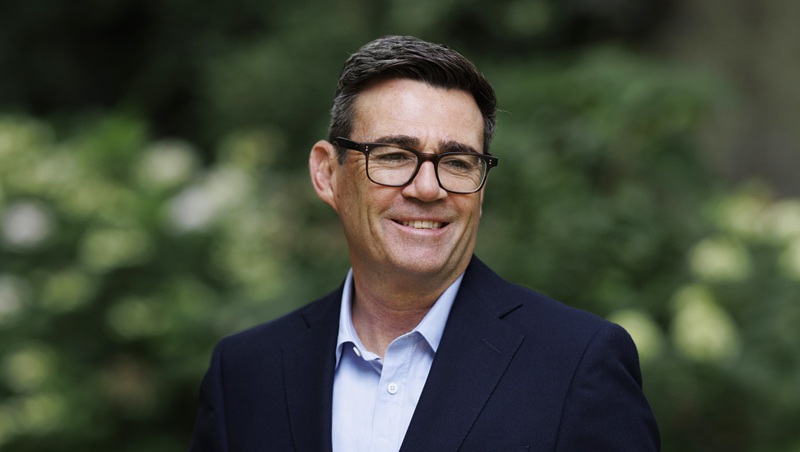
Andy Burnham has delivered his first speech as prime minister at the Labour Party Conference. Here the key points of interest to businesses.
EU-UK relationship
Burnham said “Brexit has done more harm than good” and the UK and EU’s current relationship is “not good enough”.
The prime minister confirmed there will be a UK-EU summit later this year where countries will discuss how to “best work together on immigration”, and the UK will look to “secure gains for our industries most harmed by Brexit”.
But he said those steps are “not enough”, because “we will not give Britain the clear path we need into the rest of the century until we decide on a long-term relationship with what is still our largest market”.
In a strong indication he will look again at Britain’s membership of the EU, Burnham said he will “lay out to the country what I believe the different options are for Britain’s long-term relationship with our European partners”.
Brexit has led to the UK losing “some of the control we had over our economy, as a decade of low growth has put us in a weaker position”, he claimed.
Energy and water
Referencing the high costs that many businesses are facing, Burnham said: “businesses need the basics to be functional and affordable”.
“One of the biggest barriers to growth in the UK is the cost of energy, he said, adding that “British businesses and billpayers pay some of the highest energy costs in Europe”.
He pledged to bring energy costs in line with the UK’s European neighbours within 10 years and announced the creation of Great British Grid.
“A publicly-owned company that will challenge the private sector operators. It will increase competition, drive down costs and speed up connections so businesses can expand and grow more quickly”, he said.
Burnham also said Angela Eagle will present “a strengthened Water Bill to Parliament” that will repeal “Margaret Thatcher’s ideological ban on public ownership of water companies”.
“It will start a 10-year journey to a very different water system,” he added. “It will strengthen public control. Mayors will have new powers to hold water companies to account, with tougher consequences for those which repeatedly fail. It will close the loopholes used to pay excessive bonuses.
“Where private companies serve the public interest, we will support them. But the consequences will be clear for those who do not, including taking back control or public ownership.”
AI and innovation
Burnham said there is “huge potential” in every part of Britain. “I see start-ups and scale-ups pouring out of our world-class universities. I see businesses up and down the country playing their part and ready to do more”, he added.
Echoing former prime minister Gordon Brown’s pledge to make the UK “the world’s innovation nation”, Burnham said:
“When Britain takes the presidency of the G20 next year, I will show our new-found confidence as a country, and I will show it to the world by putting AI centre stage and Britain will then work to develop a new global code to capture its benefits whilst being clear-eyed about its risks.”
Social care
Burnham said out plans for a National Care Service, free at the point of use. This would substaintially change how the care sector is organised and funded.
He said: “If we carry on like this, broken social care will break the NHS too. And we can’t let that happen, we must never let that happen, this party that founded the National Health Service. There is only one real answer.
“A person-centred, high-quality care service that starts in the home. A system in the best traditions of this party, where everyone contributes and everyone is covered.
“Free at the point of use and no care charges paid out of your basic state pension. Care that is about people not profit. Which gives peace of mind over care needs in later life. Which protects people’s homes and their savings. And gives proper recognition to the care workers we will all need to rely on at some point in our lives.
“This is the National Care Service we will build.”
The National Care Service will be funded by adjusting the pension triple lock from 2030 and linking the annual increase to the greater of inflation or 2.5%.
Reaction to Andy Burnham’s Labour Party Conference speech
Shevaun Haviland, director general of the British Chambers of Commerce:
“This was a powerful speech in which the prime minister took a long-term view and signalled a willingness to make tough choices. He gave business some encouraging signals that his government will avoid adding to the cost of doing business.
“But next month’s Budget will now be the critical test, it must cut those costs, unlock growth and let the entire country benefit.
On public control:
“The business community will be concerned about the potential for greater public control. State control should not be the default answer to poor performance in utilities and critical infrastructure.
“Business needs certainty, targeted regulation and a clear public value test, so investment keeps flowing and customers see better outcomes.
On triple lock / welfare reform:
“It was encouraging to hear the prime minister reiterate his commitment to bringing down the welfare bill. With taxes maxed out and borrowing costs at a premium, government spending must be the key part of the fiscal equation to change.
“The British Chambers of Commerce has called for an honest debate about big ticket measures such as the triple lock, and this is something businesses will welcome today.
On AI:
“Putting AI centre stage is key to turbocharging economic growth. We have great innovation and a focus on leading global regulation.
“But we need a bolder strategy on adoption that helps all business stay ahead of the technological journey.
On the EU relationship:
“The prime minister’s pragmatic tone today on rebuilding our relationship with the EU is welcome.
“Businesses want a strategic long term plan to make trade with our largest export market easier, cheaper and faster, so they can focus on growth. The Prime Minister gave a clear indication he has heard our call and promised the UK/EU summit will take place by the end of the year.
On energy costs:
“The prime minister also rightly diagnosed that faster connections to the electricity grid and driving down energy costs are key drivers for economic growth. But it’s crucial that more detail on the Great British Grid and how it will operate are quickly outlined.
“We welcome his pledge to make pragmatic choices on North Sea transition.
“While consumers and the very smallest businesses will benefit from the scrapping of VAT on electricity from this week, businesses will be left waiting for benefits of market reform before their bills are cut.
On devolution:
“As the prime minister looks to drive growth through devolving power closer to people and places across the UK, we want to see more economic levers given to communities across the UK.”
Rain Newton-Smith, CBI Chief Executive, said:
“The prime minister has painted a vision in the boldest of primary colours for the transformation he wants to unlock for the country – one with a stronger role for the state, but ultimately dependent on private sector investment and delivery.
“Key to making this partnership a success will be recognising what business brings to the table – its expertise, innovation and, most crucially, the investment needed to turn ambition into growth. Public investment should be designed to crowd in, rather than crowd out, private capital.
“Government is about choices, and the prime minister deserves credit for being willing to confront difficult questions about the long-term sustainability of the state pension in order to tackle the challenge of social care. Business will welcome an honest conversation about the trade-offs needed to deliver lasting reform. The same ambition must be brought to tackling youth unemployment where delivering on Milburn’s recommendations will depend on creating the conditions for businesses to grow, invest and create the jobs young people need.
“Just as important is the recognition that transforming the state cannot come at the expense of sound public finances. Fiscal credibility matters. The prime minister’s commitment to discipline should reassure markets that reform will be pursued alongside stable and sustainable public finances.
“Pragmatism on the North Sea is a welcome signal, while the detail of GB Grid should now be developed with business, with a clear test: does it accelerate connections and unlock, rather than displace, the private investment needed to deliver them.
“British firms are competing for investment in an increasingly challenging global environment. A more ambitious economic partnership with the EU that removes practical barriers to trade, improves market access and strengthens cooperation can deliver tangible gains for growth on both sides.
“The model of growth developed in Manchester – bringing government and business together around a shared plan for investment and delivery – is one businesses across the country can get behind. The Budget now needs to provide the first downpayment on that partnership. That means giving firms breathing space from the cumulative cost pressures holding back investment and hiring, so they have the confidence and capacity to raise living standards and deliver growth in every postcode.”
Polly Dhaliwal, Enterprise Nation chief operating officer:
“This was a speech with real heart, and it was refreshing to hear a prime minister talk so honestly about the challenges ahead. That honesty is what small businesses want from their leaders, and it gives us confidence in the direction of travel.
“Putting AI centre stage is exactly the right instinct. A new global code that captures the benefits and recognises the risks, developed as Britain takes up the G20 presidency next year, is the right approach.
“He’s also right that we can’t continue with the level of political turbulence we have got used to, so a new national commission on electoral reform is welcome, because businesses plan and invest best when policy is steady. A commitment to growth in every postcode and more power to communities is very welcome. Small businesses are at the heart of every community.
“Taken together with the lack of detail in the chancellor John Healey’s speech, this adds to the anticipation ahead of the Budget on 28 October, which will be growing for the UK’s small business community. We look forward to working with the government as the detail emerges, and to making sure the voice of small firms is heard as policy takes shape.”