
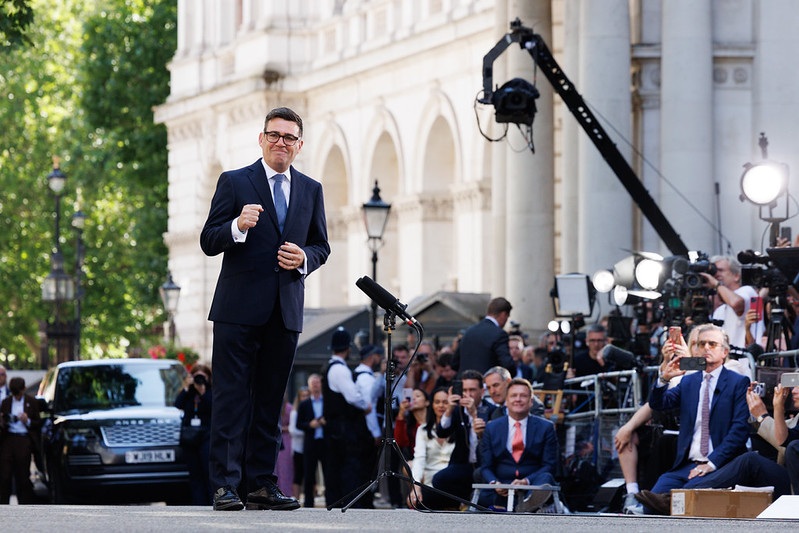
Andy Burnham has become the new UK prime minister. He has pledged he will lead a “pro-business” government, but what do small business owners want him to deliver for them? 32 entrepreneurs told us.
“If Andy Burnham really wants to back small businesses, he needs to sort out the things that stop them growing. Reform business rates and tackle sky-high commercial rents, make the tax system simpler, help SMEs with skills, apprenticeships and technology, give local councils the power to make decisions for their own communities, reduce the cost of employing people, and do something about landlords who leave shops empty for years.
“Busy high streets create jobs, bring communities together and give small businesses the confidence to invest and grow.”
Tina Gatherum-Reading, editor, publisher and author
“I want to see a government that makes it easier for small businesses to grow instead of spending precious time navigating paperwork. Give us simpler systems, better access to finance, support for carers running businesses, and affordable training.
“As the parent of a child with additional needs, self-employment isn’t a luxury, it’s what allows me to work while caring for my son. Many carers rely on small businesses for that same flexibility. We don’t expect success to be handed to us. We simply want a fair chance to build something meaningful. When small businesses succeed, families, communities and local economies thrive.”
Justina Pralgauskaite, GlowTina
“The UK’s economic growth depends on business, yet whilst large organisations receive regular support from government, founder-led SMEs rarely do. I want to see VAT reformed so it no longer acts as a barrier to growth. A phased approach, similar to income tax, would encourage businesses to scale without the fear of an immediate 20% cliff edge.
“Government also needs to ensure their backed loans are genuinely accessible, as many viable businesses still struggle, unnecessarily, to secure investment and therefore growth.
“Finally, micro and small businesses should not be governed by the same rules as large corporations. Proportionate regulation would unlock entrepreneurship, jobs and wider economic prosperity.”
Carol Evans, I Am Carol Evans
“I’d like the new prime minister to recognise that Britain’s creative industries are one of our greatest economic assets, yet many small businesses operating within them face rising costs, skills shortages and increasing uncertainty.
“The priority should be creating a stable environment where businesses can invest with confidence. That means simplifying the tax system, reducing unnecessary regulation, improving access to finance and making it easier for small businesses to recruit and retain talented people.
“The government should also do more to support UK businesses that export their services internationally. Small businesses don’t expect handouts—we want the confidence to invest, create jobs and grow, knowing the rules won’t constantly change.”
Oliver Moheda, Total Artist Management
“Around 25% of small businesses in the UK are owned by disabled people, and we contribute a lot to the economy. We’ve all of the same issues as non-disabled business owners, alongside having to deal with potential complications due to our additional needs.
“I would love for Andy Burnham to ensure that Access to Work treats everyone equally – as with PIP, it often feels like a lottery as to whether you will get a “good” or “bad” assessor – and quickly. The impact of applying, and renewing, is far too long, having significant impact on those in employed work and those who are self-employed.”
Vie Portland, coach, trainer, speaker and author
“As the founder of a small business support agency and an ADHD coach, I see first-hand how many neurodivergent entrepreneurs are falling through the cracks of a system that wasn’t designed for them. I’d love to see the new prime minister recognise that one in five business owners thinks differently, whether that’s ADHD, autism, dyslexia or another neurotype, and ensure that business support programmes, funding applications and government processes are genuinely accessible, not just technically available.
“Small businesses don’t need more hustle culture rhetoric. We need simpler systems, less red tape and a government that understands that thriving doesn’t have to look the same for everyone.”
Nic Gray, Nic Gray & Associates
“Stop making small business owners pay tax on money they haven’t earned yet. HMRC’s payments on account system can put real pressure on cash flow, especially for businesses whose income varies from year to year. It’s particularly challenging for those in their first year of business, who can effectively face a double tax payment.
“That money is far better left in the business to fund growth and invest in its future. If the government wants small businesses to thrive, it should start by trusting them to pay tax when it’s actually due.”
Kate Tynan, The Cake Business Club
“Support for businesses in rural locations, and a focus on business development, especially the south west which endlessly gets forgotten. In Devon, we have a strong focus on tourism and small businesses make up the mainstay of work opportunities but we are crippled by regulations more suitable for large scale companies.
“As a female business owner, my concern is also that women-opened small businesses, which employ women in larger numbers and make up nearly 20% of all enterprises, have minimal governmental support for smaller scale specifics like maternity cover.”
Isabella Day, The Remarkable Goldsmiths
“Small business owners don’t need more complicated schemes or political soundbites. We need practical support that improves cash flow, makes funding easier to access and gives growing businesses the confidence to invest and employ.
“I’d also like to see far more attention given to women-led businesses, especially midlife founders who are building companies while managing caring responsibilities, hormonal change and financial pressure. Too many brilliant women are still undercharging, underfunded and overlooked. When we support founders to grow sustainable, profitable businesses, we don’t just help individuals – we strengthen families, communities and the wider economy.”
Tracey Louise Taylor, MenoMoney
“If Andy Burnham plans to make a meaningful difference to small businesses, he should look beyond funding alone.
“Small businesses also need practical, impartial help to become easier to discover, understand and trust online as search and customer behaviour change.
“AI creates a huge opportunity, however, many founders are blocked by fragmented advice, unclear use cases and a lack of confidence about where to start.
“Government-backed support should combine digital skills, AI adoption and marketing direction, with guidance built around real business problems rather than individual tools or passing trends.
“Better access to trusted expertise would help small businesses compete, improve productivity, and turn technology into sustainable growth.”
Paul Culshaw, Recognition
“I run my business on my own, with no staff. I still get hit with the full National Insurance rise. There’s an allowance meant to help small firms with this, but sole directors don’t qualify, so I get nothing back.
“Then there are business rates and things like Making Tax Digital, which take just as much time whether you’re one person or a big firm. I don’t mind paying my share, I know it pays for things we need. I just want a fair shot at earning an honest living. Burnham needs to sort this out.”
Mark Hewitson, Mark Hewitson Photography
“I don’t want special treatment from the government; I want fair opportunity to grow. My message to the new prime m inister is simple: help us help you. If small businesses are given the confidence and stability to invest, employ people and grow, we’ll play a huge part in strengthening the UK economy.
“People often say the high street is dying because everyone shops online. I don’t believe that’s the whole story. Many independent businesses simply can’t afford rising rents, business rates and increasing costs of trading. Make it more affordable for small businesses to open and stay on our high streets, and you’ll see more thriving local businesses, stronger communities and healthier economy
Simona Ceple, Exdi Furniture
“As a high street retailer, I’m really hoping he introduces proper business rates reform that is fair to our high streets. My rates bill nearly doubled in April (£95 to £175 per month) and it’s crippling on top of wage and national insurance increases and all other bills too.”
Kirsty Devine, Simply Divine Things
“There is so much that could be done to improve the support for small businesses and some of it would make an immediate impact:
“The current VAT threshold and business rates negatively impacts SMEs. The abrupt 20% VAT rate discourages growth, as businesses stay below the threshold. Similarly, recent business rate reviews have burdened SMEs without adjusting the threshold.
“Modifying the VAT rate structure or raising both thresholds would foster growth, support SMEs, and boost employment by allowing reinvestment.
“Businesses are struggling with high electricity costs and the complexity and expense of GPSR regulations, which have caused many SMEs to stop selling to the EU and Northern Ireland.”
Michelle and Andy Joy, Shelden Glass
“Stability please. For a significant period of time. No radical changes, no wars, no more elections, no leadership contests, no frantic changes that put the economy in free fall. Nothing that scares consumers. No tax increases. No VAT increases. No more minimum wage rises. Just nothing but stable positivity so we can plan, and our customers can relax back into spending without panic saving or scrimping.”
Jo Smedley, Red Herring Games
“Raise the level at which you have to start paying VAT on turnover. It forces micro businesses off a cliff-edge where £1 over £90,000 means suddenly they owe £18,000 on the same turnover the following year. Either raise it to something like £150,000 or create a sliding increment so 5% in first year past the limit, 10% the year after.
“Most small service businesses can’t just slap 20% onto their prices. There are many small businesses choosing to keep their turnover below 90,000 and limit their own growth rather than fall off the cliff-edge with the hardship and uncertainty that brings.”
Marianne Killick, Marianne Killick Acupuncture
When Keir Starmer first announced he would resign and before it was confirmed that Andy Burnham would take over, we asked 16 other entrepreneurs to tell us what they want to see from the new prime minister. Here’s what they said:
“My biggest hope for a new prime minister is simply that small businesses are listened to. We are often described as the backbone of the economy, but many of us feel increasingly overlooked. A reduction in VAT would make a significant difference, both for businesses and consumers, at a time when every pound counts.
“The past few years have been particularly tough. Whilst I am fortunate to be a one-person business and don’t carry the burden of staffing costs, rising energy bills, increased fuel prices and the growing costs associated with importing and exporting have all had a real impact. Margins are being squeezed from every direction, making it harder for small businesses to invest, grow and plan for the future.
“I’d also like to see stronger protection for small creators, designers and artists. The scale at which original products are copied and sold through large online marketplaces is incredibly frustrating. Many small businesses invest significant amounts of time and money protecting their intellectual property, only to find copies appearing online with little consequence for those responsible. There needs to be greater accountability for the platforms that facilitate this and more meaningful support for the businesses trying to protect the ideas they’ve worked so hard to create.
“Small businesses don’t expect special treatment, but we do need a level playing field and a government that understands the realities we face every day.”
Amanda Marshall, 3DONKEYS
“My immediate reaction is concern around continued uncertainty. Small, service-based businesses like ours rely heavily on stability to plan staffing, pricing, and investment in equipment.
“From the next prime minister, I want to see practical support for SMEs, particularly around reducing red tape, fair taxation, and stronger action on late payments, which can seriously impact cash flow in our industry. There also needs to be more focus on vocational training to bring skilled technicians into trades.
“We don’t need handouts, just a stable, fair environment that allows us to grow and operate with confidence.”
Stephen Wales, Bespoke Pest Control
“I’m glad that Labour has introduced late payment legislation, expanded access to finance for SMEs and have started to reduce the amount of red tape. But there’s still a mountain to climb (metaphorically speaking).
“We need better late payment enforcement. It’s not enough to say that there will be penalties. The penalties need to be severe and swift if they are going to work. If more small businesses are going to flourish, create jobs and boost the economy Labour need to make it easier to hire people and to get investment. They’ve made a little bit of progress, but there’s still a long way to go.”
Angelique Ruzicka, WillowsEarth
“Keir Starmer’s resignation is a moment for the next prime minister to reset the relationship with small business founders. I launched my business this month in Northamptonshire. My local council scrapped the start-up business grant under BIPC.
“Other councils still offer them. That postcode lottery is exactly the kind of inequality the next PM should fix. I want to see a national commitment to local start-up grants, up to £2,000, tied to a supported business planning programme. Not handouts. Earned support. The next PM needs to back founders from day one, wherever they live, especially those onboard with the net zero transition.”
Darin Graham, Daring Media
“Keir Starmer’s resignation is a chance to reset the relationship between government and the people building British businesses from scratch. I want to grow my team, but the cost of employment and day-one rights make hiring feel out of reach for a small business at my stage. I have had to rely on AI and automation to plug the gap instead of bringing in the people I actually need. The next PM needs to reduce employer NI, simplify employment rights for small businesses, and make hiring your first member of staff something to celebrate rather than fear.”
Julia Hartley, Guided Outdoor Adventures
“I’d like the next prime minister to revoke Keir Starmer’s social media ban for under 16 year olds. I’m all for curfews, time limits, strict enforcement that no adults can contact kid, more regulation and fines of platforms, more action on cyber bullying.
“All of those are preferable in my opinion to an outright ban on social media. There does need to be more restrictions on the platforms, but we’ve always celebrated entrepreneurs and business owners in this country. Whether that’s older people like Richard Branson and Alan Sugar or younger entrepreneurs like Ben Francis of Gymshark.
“This generation of entrepreneurs will be the people who know how to market on TikTok and Instagram. This is the modern version of someone selling sweets at school or using the playground as their business launch.
“We shouldn’t be saying “In my day we’d print out some flyers and walk the streets for four hours” – there are more effective ways to build a business these days. Will the social media ban leave UK teenagers at a disadvantage compared with young people in other countries?
“If a 15-year-old in the UK cannot learn content creation, marketing, community building or personal branding, but a 15-year-old elsewhere can, does that create a skills gap?”
Alex McCann, Altrincham HQ
“The next prime minister must be mindful of the need of entrepreneurs who are doing their best to run small businesses, while living with disability and medical conditions. They want to work and that should be reflected in the policies created and the support that is given to enable them to run their small businesses and continue to support the economy including local and government contracts.”
Sonal Dave, celebrant, toastmaster and public speaking expert
“I would like to see less talk about emigration and more focus on how we can strengthen the British economy, address chronic unemployment, reduce council taxes, and lower the cost of living. I would like to hear more solution-focused conversations and not criticise what people did in the past. I would like to hear about how we can all pull together and get out of the current situation.”
Ana Clarke, business strategist
“Much of counselling and psychotherapy in the UK is delivered by qualified practitioners in private practice, many operating as limited companies and often without direct taxpayer funding.
“I would urge the government to recognise the pressures facing small professional businesses. Reducing dividend tax and restoring a meaningful tax-free dividend allowance would help keep small practices viable.
“Ministers should also legally protect the titles ‘counsellor’ and ‘psychotherapist’, which is long overdue for public safety, and extend VAT exemption to mental health therapy services, so more people can access timely, ethical support.”
Sumeet Grover, Grover Olufsen Psychotherapy
“I want to see a leader who will genuinely commit to simplifying the tax system for micro-businesses and cutting the administrative red tape that drains a small business’s time. The next PM needs to make the UK a clearer, more straightforward place to build and grow a business.”
Ruth Chappell, Dressage Anywhere
“My focus is less on personalities and more on policies that help small businesses grow. The next prime minister must prioritise reducing barriers to trade, improving access to funding, supporting exporters, and creating a more stable environment for entrepreneurs. Small businesses are the backbone of the UK economy, yet many founders are facing rising costs, complex regulations, and uncertainty.
“As a business expanding into the US, GCC, and potentially India, I want to see stronger support for innovation, international trade, and home-grown brands looking to compete on the global stage.”
Samantha Parkash Singh, Lushka
“I spend a lot of time speaking to business owners across different industries, and one thing I hear again and again is that it feels harder than ever to run a small business.
“Whether it’s hospitality, retail, travel or professional services, many businesses seem to be facing more regulation, rising costs and increasing pressure year after year. Most business owners aren’t asking for handouts. They just want some stability and the confidence to plan ahead.
“I’d like to see the next prime minister pay much closer attention to SMEs. Small businesses create jobs, support local communities and drive growth, yet it can feel like they’re being held back rather than being allowed to thrive. Less bureaucracy, clearer policies and a better understanding of the realities facing entrepreneurs would make a real difference.”
Damien Baxter, Geo Growth Media
“My biggest hope from a new prime minster is that they become proactive in being pro SMEs as they are the lifeblood of the private sector. Small businesses need less red tape, lower taxes, and fewer unnecessary costs so that businesses can grow, thrive and focus on what they do best: running their business, supporting their customers, and strengthening their local community.
“I’d also like to see a broader approach to health services, with more emphasis on helping people understand their health and preventing illness, rather than relying only on the NHS once problems have already developed. Community support matters too, because when small businesses thrive, they help build stronger, more connected places where people can live and work well.”
Kerry Madgwick, Kerry’s Natural Health Solutions
“Like many start-up founders, we’re less concerned with who occupies Number 10 and more concerned with creating an environment where entrepreneurs can build, hire and invest with confidence. The UK has incredible talent and remains one of the best places in the world to start a business, but early-stage companies need greater certainty around taxation, employment costs and access to growth capital.
“We’d like to see the next prime minister focus on reducing barriers for small businesses, encouraging investment into UK start-ups, and supporting innovation-led companies that have the potential to create jobs, attract international visitors and contribute to economic growth.
“Small businesses don’t expect special treatment; we simply need stability, consistency and a government that recognises the vital role entrepreneurs play in building the economy of the future.”
Matthew Rushworth and Melanie Keenan, ReelTrip
“Business doesn’t just need financial incentives; it needs the confidence to grow. Across the hundreds of entrepreneurs and business leaders I engage with, that’s the message I hear most consistently. Government should recognise that one size doesn’t fit all. With almost three-quarters of UK businesses employing nobody other than the owner, Britain’s next jobs boom could come from helping more entrepreneurs recruit their first employee. That first hire unlocks the growth potential of the business, the individual and, collectively, the wider economy. Supporting entrepreneurs to create jobs isn’t simply business policy; it’s an investment in Britain’s future prosperity.”
Jarmila Yu, YUnique Marketing Ltd.
“There are up to 4.6 million self-employed workers in the UK, making up about 13.1% of the total national workforce.
“There were also around 850,000 new businesses registered with Companies House in 2024, and the Global Entrepreneurship Monitor notes that 36% of the UK’s working-age population is engaged in entrepreneurship.
“However, successive governments have ignored the enterprise sector. I hope the new prime minister puts entrepreneurship at the heart of his economic policies.”
Christopher Norris, 12Ronnies