
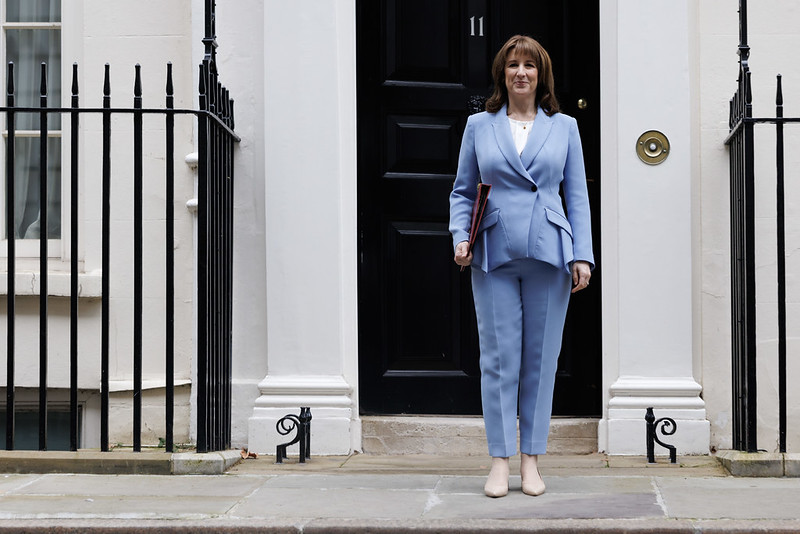
Chancellor Rachel Reeves has delivered her 2026 Spring Statement, an update about the state of the UK economy and new Office of Budget Responsibility forecasts.
Reeves stuck to her commitment of only one fiscal event a year with the November Budget so there were no new policy or spending announcements in the Spring Statement.
Here are the key points and reaction from experts.
Economic growth forecasts
In its economic and fiscal outlook the Office of Budget Responsibility (OBR) has downgraded its economic growth forecast for 2026 from 1.4% to 1.1%. After that, the forecasts are faster:
2026: 1.1%
2027: 1.6%
2028: 1.6%
2029: 1.5%
2030: 1.5%
Unemployment
The OBR forecasts that unemployment will rise to a peak of 5.3% in 2026. A peak of 4.9% was forecast at the November 2025 Autumn Budget. Unemployment reached a five year high of 5.2% in the three months to December 2025.
After the peak, the OBR said unemployment will fall every year until 4.1% in 2030.
Reeves acknowledged that unemployment among young people is a particular problem, but said the government “won’t leave an entire generation of young people behind”.
In the three months to December 2025, the unemployment rate for young people aged 18-24 was 14%, the highest since 2020.
Inflation
The OBR forecats inflation will fall from 3.4% in 2025 to 2.3% in 2026 and 2.0%, the Bank of England’s target, from 2027 onwards.
Impact of Middle East conflict on the UK economy
All of the OBR’s forecasts do not take into account the impact of a rise in energy prices as a result of the conflict in the Middle East.
In its report, the OBR says: “Conflict in the Middle East, which escalated as we were finalising this document, could have very significant impacts on the global and UK economies”.
Potential future announcements?
In the Mais Lecture later this month, Reeves said she will “set out three major choices that will determine the course of our economy into the future”.
These will focus on “breaking down trade barriers and deepening alliances with our European partners for a more secured, and connected economy”, “backing innovation and harnessing the power of AI so that entrepreneurs and innovators thrive here in Britain and so that working people reap the rewards” and “transforming our economic geography, so that we can build growth on a broad and stable basis spreading opportunity and unlocking opportunity in every part of Britain”.
Impact of Autumn Budget u-turns
The OBR said the extra business rates relief for pubs following criticism of reforms will cost the Treasury an extra £100 million a year, while the increased agricultural inheritance tax relief threshold after protests from farmers after it was cut means the policy will raise £100 million a year less for the Treasury.
Spring Statement 2026: Reaction from experts
Tina McKenzie, policy chair, Federation of Small Businesses:
“Inaction from the chancellor is not enough for the UK’s 5.7 million small businesses and self-employed who are being squeezed by cost pressures and facing a new cost crunch about to hit in April. We’re a month away from employment costs going up, business rates going up and energy bills going up. The chancellor missed the chance today to address the costs stack about to hit small firms.
“The downgrading of the growth forecast for this year will be no surprise to small businesses, where cost burdens have already started reducing growth plans, cashflow and job creation in our local communities.
“Given the heightened global tensions of recent days, if there is another energy price crisis the government must stand ready to bring forward a package of help for small business energy consumers, akin to during the last huge price spike.
“As the April costs stack bites, the chancellor must give assurance that she’ll take decisive action to ease the taxes and costs imperilling small firms and the self-employed, and in turn imperilling the jobs, opportunities and local prosperity they could otherwise bring.”
Shevaun Haviland, director general, British Chambers of Commerce:
“Today’s Spring Statement confirmed that the UK economy is heading in the right direction, but a further acceleration is needed.
“With GDP expected to grow well below 2% a year until 2030, unemployment set to rise in the near term and net trade remaining anaemic there is more to do.
“Crucially, the OBR’s inflation forecast does not take into account the widening conflict in the Middle East and increasing disruption to oil and gas supplies and shipping. That inevitably adds a fresh element of uncertainty on prices and government borrowing.
“Recent BCC research shows more firms want to expand, with nearly half intending to grow this year, compared to a third in 2025.
“To turn that optimism into a reality the government is right to focus on boosting exports, increasing regional investment and transforming productivity.
“The immediate priorities must be accelerating long overdue business rates reform and making sure changes to employment rights don’t add unnecessary costs.
“Alongside this, firms need policies that help them invest in skills and AI to increase productivity.
“Trade is also vitally important. Tariffs aren’t going away and the EU reset needs to be properly handled to give British firms the best platform possible to grow exports.
“Finally, with growing geopolitical uncertainty, we need to get defence right. The government must unveil its defence investment plan as soon as possible. It’s vital for the UK’s security and our economy.
“Clear spending decisions would unlock private investment, support SMEs, and boost jobs, skills and regional growth. But it is crucial that government procurement gives smaller firms the chance to compete.
“The plan also strengthens the UK’s case for access to the EU’s defence finance facility. That could give British firms a chance to bid into major European defence projects and secure further export-led growth.”
Daniel Woolf, head of policy, Enterprise Nation:
“The chancellor’s focus on stability is exactly what the small business community needs, particularly as we navigate a global landscape made increasingly volatile by the unfolding conflict in the Middle East. While we welcome the discounts on business energy costs and the £150 reduction in household bills, there is a lingering concern that these measures may not be enough if we see a significant jump in global prices.
“As the chancellor herself noted, rising energy prices pose a risk of putting upward pressure on inflation, which could quickly erode the ‘certainty’ these policies aim to provide.
“Our members are resilient, but they are also realistic. They know that the six interest rate cuts since the election have provided vital relief, but that progress is fragile. For the ‘youth guarantee’ and planning reforms to truly take hold, the government must remain vigilant in protecting the domestic economy from these external shocks.
“We need to ensure that the progress made in rebuilding Britain’s economic credibility isn’t wiped out by a sudden spike in overheads that sits outside of any small business owner’s control.”
Derek Ryan, CEO of North West Europe, Bibby Financial Services:
“The chancellor’s Spring Statement is unlikely to shift the dial for SMEs that were hoping for fresh measures to unlock growth. With 46% of firms delaying major investment decisions until after today’s announcement, this was an important moment to unlock pent-up investment – even if the government’s focus for today is on stability, rather than new fiscal intervention.
“Many small business leaders will still be grappling with the high costs of doing business and the elevated tax burden, both of which continue to weigh on hiring and investment decisions. Today’s absence of targeted SME measures may mean that uncertainty lingers, doing very little for business confidence.
“SMEs won’t have expected a silver bullet from today, but they do need a clear and consistent strategy that supports investment, improves access to finance and eases the pressures that constrain growth. Stability is welcome – but without visible momentum behind small business growth, SME confidence risks remaining stuck in neutral at a time when the UK economy needs it in gear.”
Kate Hayward, UK managing director, Xero:
“The chancellor’s pro-growth message is likely to feel at odds with reality, particularly for small businesses who are still managing the fall-out of a difficult winter and likely bracing for another year of uncertainty.
“Our data shows sales growth hit an 18-month low in the December quarter, a ‘make or break’ period where the festive boost that many were banking on simply never arrived. Labour-intensive sectors like hospitality are particularly exposed as they navigate rising overheads and flatlining demand. A low-key Spring Statement is unlikely to offer much comfort to those industries that desperately need measures which relieve pressure on the bottom line and give them the confidence to get back to investing and growing again.
“There might not have been any major surprises today but many will still be feeling deflated after hoping for more focus on small businesses. Now is the time to take stock – review forecasts, do some scenario planning and see if you need to adjust your plans so you have the resilience to handle any changes and another year of sluggish growth and higher costs.”
Theresa Lindsay, chief marketing officer, Novuna Finance:
“Although we weren’t expecting any sweeping reforms, today’s Spring Statement still fell short of setting a clear strategy to relieve the pressures facing businesses and households. With oil prices spiking this week, motorists need reassurance that the fuel duty discount will stay. For households, the falling energy price cap sounds positive, but knocking around £10 a month off a typical bill is hardly transformative. If the government wants to deliver real relief, it should go further and tackle the levies on energy bills that are still squeezing households.
“Businesses are under pressure too, with higher employer National Insurance acting as a handbrake on hiring and investment, just as unemployment hits its highest level since 2021. The focus should now be on making recruitment more affordable for business owners. Extending business rates relief to the wider hospitality, retail and leisure sectors would also give these businesses the boost they need. The Chancellor’s growth speech later this month is a chance to address some of these issues and deliver the solutions missing today.”
Benjamin Craig, associate director, Ayming UK:
“Growth comes from stability. That’s what businesses have been asking for time and again, and until they genuinely feel they have it, they’ll keep pushing for it.
“What firms need most is the confidence to plan properly. They need to know that the framework in place today will still apply in two, three or four years’ time. Investment decisions aren’t short term. They take years to deliver results, and if there’s a lingering concern that policy might shift, businesses will naturally hold back.
“There’s also a broader perception issue. The government has appeared distracted by infighting, and whether that’s fair or not, perception shapes confidence. Even strong ideas, like those in last year’s Industrial Strategy, lose impact if businesses aren’t convinced there’s a clear and credible plan behind them. The priority now should be to provide consistency and give businesses the stable environment they need to scale and innovate.”
Laura Beales, co-founder and COO, Tally Workspace:
“Signals that borrowing is forecast to fall and fiscal headroom has increased will be welcomed by businesses looking for stability. For many SMEs and growing companies, the past year has been defined by uncertainty – not just around interest rates, but around the broader economic direction.
“When government finances appear more predictable, it reduces the risk of sudden policy shifts. That clarity matters. Businesses plan hiring, expansion, and long-term commitments based on what they expect the environment to look like six to twelve months ahead.
“This won’t change conditions overnight, but improved fiscal stability can help restore confidence. And when confidence strengthens, growth decisions follow – including decisions around office space, investment and scaling teams.”
Andreas Adamides, CEO, Helm:
“The chancellor boasts about growth, but British businesses are growing in spite of government policy, not thanks to it.
“Soaring costs, higher taxes and rising wage pressures are squeezing firms and killing jobs. Unemployment is now at its highest level since the pandemic. That’s not success, it’s the price of bad policy.
“If the chancellor truly backs British business and working people, they should scrap the National Insurance hike and cut the cost of hiring.”
Ben Willmott, head of public policy, CIPD:
“Against an uncertain geopolitical backdrop, it’s critically important that the government creates conditions that improve confidence and stability for businesses to deliver job creation and skills development.
“We welcome the chancellor’s recognition of the challenges that many young people face entering employment, particularly the collapse in apprenticeship starts, and we’re encouraged to hear the Government will be setting out more reforms to support young people in the coming weeks.
“However, meaningful progress will require bold action. Introducing an apprenticeship guarantee for 16 to 24-year-olds, a measure strongly backed by employers, would help ensure many more young people have a clear pathway into work.
“The government can also support young people and employment more widely by considering pausing planned uplifts to the National Living Wage youth rate and ensuring the Employment Rights Act measures don’t act as a further headwind to job creation.
“This means meaningful consultation with employers and where necessary compromise on key measures in the Act still to be decided in secondary legislation. The government must also ensure there is a well-funded communications campaign to ensure employers are aware of the changes ahead of time and adequate resources are allocated to Acas, so smaller businesses in particular have access to the support they need to comply.
“More broadly on growth, we need to see measures that will help employers across all sectors of the economy invest in skills and innovation. For example, ensuring the new growth and skills levy helps employers invest in training their workforces to tackle skills shortages and supports the technology adoption that can improve productivity.”
Christina Hamilton, CEO, ClearCourse:
“Today’s statement paints a picture of a UK economy turning a corner, defined by falling inflation and resilient public finances. However, if we want to maintain this positive momentum, we need to be backing the real engines of growth – the UK’s 5.7 million small businesses.
“Many small business leaders are still apprehensive about their bottom line and how the changing geopolitical environment will impact them. If we want to drive renewed ambition across businesses and encourage a growth mindset, we need to instil fresh confidence by pointing to the growth levers that are within their control, such as technology.
“Beyond policy reforms, SMEs’ biggest barriers to growth come from the thousands of small, daily inefficiencies such as chasing customers for late payments. By encouraging businesses to think ambitiously and explore how technology – like embedded payment solutions and AI – can fix these problems, we can turbo-charge productivity and unlock cumulative growth opportunities.
“Unlocking long-term productivity gains doesn’t just mean waiting another seven months for policy changes, it’s also about taking control in other ways. By equipping SME leaders with the right tools and a forward-leaning mindset, we can ensure that the UK’s small business community doesn’t just follow the economic recovery – it leads it.”